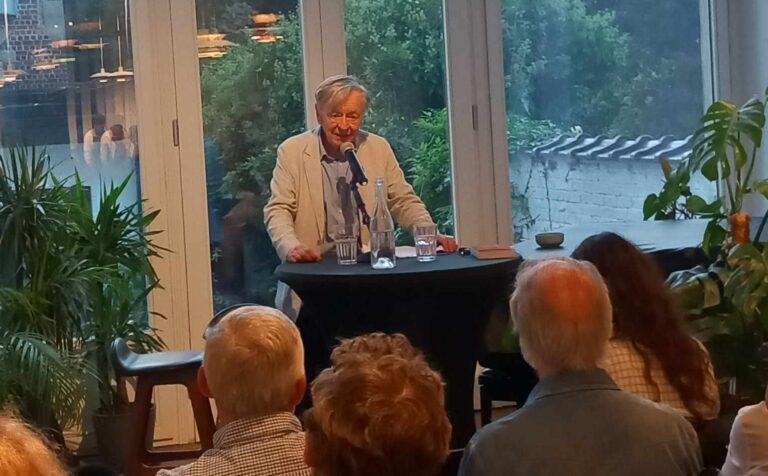
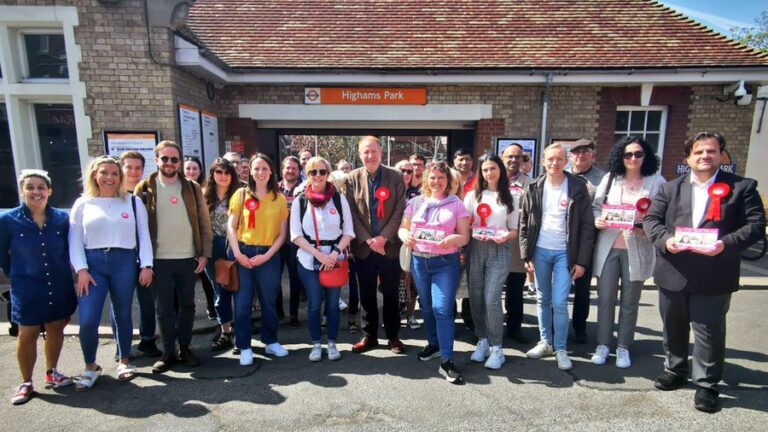
Next Branch meeting: Ken Livingstone’s campaign team
Jan 22nd
The next Brussels Labour branch meeting takes place this week:
Peter May - London Labour Party
‘The London Mayoral elections’
Wednesday 25 January - Square Ambiorix 6, 1000 Brussels – 20:00
The meeting begins at 20:00. As this event is not in a bar or restaurant, there will be no food served, and you are invited to bring a bottle.
Forthcoming meetings include:
Sister Parties meeting & reception – Preparation for Communal Elections
Wednesday 29 February - Further details tbc
Brussels Labour Annual General Meeting
Wednesday 21 March - Further details tbc
Book review: The Cost of Inequality
Dec 20th
How a dodgy ideology made the rich richer, the rest of us poorer and left the economy in ruins.
Around 1980, something changed: a seemingly unstoppable evolution in western societies went into reverse. For half a century the gap between rich and poor had been narrowing: an inevitable consequence, it seemed, of universal education, mass production, trade unionism and the rise of democracy.
Yet within a few years this trend had been sharply reversed. In the subsequent three decades, the western world has witnessed a dramatic growth in inequality. The top 1% have appropriated almost all the fruits of growth, while middle and low income groups have stagnated or worse.
Stewart Lansley’s new book, ‘The Cost of Inequality‘ (Gibson Square, 2011) looks at why this happened, and what have been the consequences. His central argument, impressively documented in a tour through the workings of modern capitalism, is that growing inequality caused the financial meltdown of 2008.
But along the way, he establishes two even more sweeping arguments, both of which tell us something important about the mess in which Europe now finds itself. He shows that the growth in inequality has its roots in an ideological shift that swept the western world from the late 1970s onwards. And he shows that, long before 2008, that ideology had spectacularly failed to deliver any of the promised benefits. More >
Guest blog from Julian Priestley: What am I bid for a toothless, dumb, blind bulldog?
Dec 14th
You know something is wrong when John Redwood, Boris Johnson, the Murdoch press and the Mail are calling it a triumph.
Even on its own terms the December EU summit plumbs new depths of government mendacity and incompetence. Even if one accepts that the aims of Cameron were legitimate – sheltering the financial sector which finances his party, or defending the single market, he came home less than empty-handed.
By forfeiting the right to negotiate an EU Treaty at the very outset, the government ensured that the summit was a quadruple failure for Britain.
First we will have no influence on the final form and content of the new intergovernmental treaty; if the UK had stayed in it could at every stage have fought its corner, paragraph by paragraph.
Second, we have achieved an isolation so melancholic that even our most traditional ‘friends’ like the eurosceptic Czechs and the hard-right Hungarians have abandoned us.
Third, even our established reputation for diplomatic competence is undermined by the crass failure to prepare the ground, by springing a text on the institutions and the other member states at the last moment, and by rejecting out of hand the procedural compromise offered by European Council President Van Rompuy.
Fourth it confirms the message to the Americans and others that doing business with Europe means working with Berlin, Paris and Brussels, not London. The business community may well draw the same lesson.
Cameron’s excuse that we reacted late because the Franco-German proposals were only tabled earlier in the week is doubly lame; a serious government might well have thought it best to take an initiative earlier rather than just reacting to proposals from others; and it has been clear for two months at least that some form of Treaty change was going to dominate this summit’s agenda.
As to our special pleading for the banks, financial services, hedge funds etc., nothing has changed. EU financial regulation is and will continue to be decided by qualified majority. There was no veto on that; there will be no veto- quite rightly because financial services regulation is part and parcel of internal market rules.
The only thing that changes is that the 26 will now develop the habit of working together on the broad range of economic policy, and that the voice of the most economically liberal, free market, high finance-friendly member state will no longer be heard. One would have to be exceptionally naive to imagine that the 26 will refrain from discussions about any aspect of EU economic and social legislation simply out of consideration for a government that has of its own free will boycotted their meetings. More >
Does Your Commune Matter To You?
Nov 28th
The Parti Socialiste – in collaboration with sister parties – has produced a new leaflet (click here to download the PDF) on the communal elections in Belgium. These elections will take place on 14 October 2012, and all EU citizens can register to exercise their right to vote.
Download the leaflet to find out why it is important to vote in the communal elections and please share the leaflet with your friends.
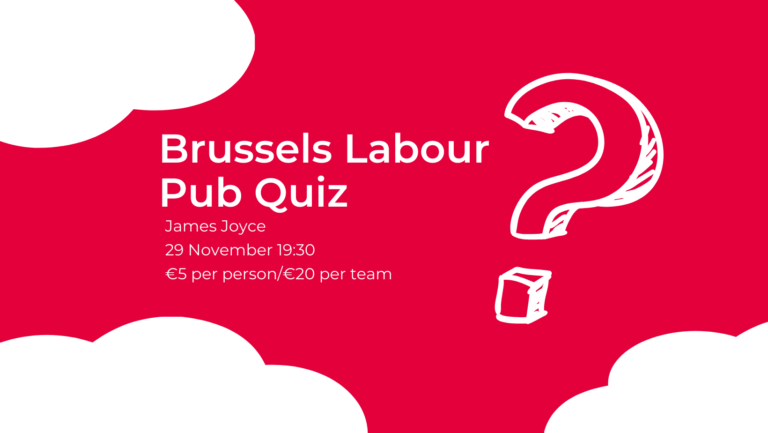
Christmas Pub Quiz 2011
Nov 23rd
The Brussels Labour Christmas Pub Quiz 2011 will be held on Wednesday 7 December at The Staff, Rue de Trèves 42, 1050 Ixelles.
Please arrive at 19:30 for the quiz, which will be compèred by Brussels Labour’s own David Earnshaw.
To register a team of four people, please email the Secretary with the name of your team and the team members and make a transfer of €20 to the Brussels Labour account: 001-1128765-52
Please include in your bank transfer your team name & indicate that it is for the quiz.
A raffle will also be held for charity, with proceeds going to the Red Cross for famine relief in the Horn of Africa.
Details are available in the Brussels Labour calendar.
Next branch meeting: Clive Betts MP
Nov 21st
The next Brussels Labour branch meeting takes place this week:
Wednesday 23 November
Clive Betts MP - Chair, Communities and Local Government Select Committee
‘Localism and the Big Society – Labour’s response
L’Horloge du Sud, Rue du Trône 141, 1050 Ixelles
19:30: Venue open – If you would like to eat, please come early and order before the meeting
starts
20:00: Start of meeting
Forthcoming meetings include:
Monday 5 December
Claude Moraes MEP and Hackney North & Stoke Newington CLP
have invited Brussels Labour members to meet the CLP members during their visit to Brussels
The Staff, Rue de Trèves 42, 1050 Ixelles
From 19:00
Wednesday 7 December
Brussels Labour Christmas Pub Quiz
with quizmaster David Earnshaw
The Staff, Rue de Trèves 42, 1050 Ixelles
Further details tbc
Wednesday 25 January 2012
Branch meeting
Further details tbc
Guest blog from Julian Priestley: ‘A treaty change is not a panacea’
Nov 21st
For certain media commentators, self-appointed spokespersons for the market, our friends outside the EU and some ministers in some EU governments who should know better, the debt crisis currently engulfing the eurozone has an easy solution. The European Central Bank should just step up to the plate and guarantee the solvency of the euroland member states.
In this black-and-white version of the world, Germany is the obstacle, haunted by its fears of returning to the hyperinflation of the early 1920s when its national bank just printed those much-photographed cartloads of million deutschmark notes. As the situation deteriorates from difficult to dangerous, the blame game has intensified.
And the culprits are now supposed to be found in the shadowy Frankfurt Group, a sinister secret society whose members happen to be the German Chancellor, the French President (i.e. the democratically elected heads of government of the two largest euroland countries) the President of the ECB, the Presidents of the European Council, the Commission and the Eurogroup, with the occasional participation of the head of the IMF and the Commissioner responsible for economic and monetary policy.
In the current hysteria this ‘Gang of Eight’ is assuming the reins of power in Europe, overthrowing democratic governments and parachuting technocrats in their place (worse still technocrats with European experience) , and imposing the fiat of Brussels in the 17 euro countries. Cooler heads might recognise the value in having regular consultations throughout this crisis with a manageable number of people who will in the end have to propose the solutions; and that this is a sensible if partial response to the much criticised leadership vacuum which has bedevilled the crisis.
And those solutions are not so straightforward. First, conferring on the ECB the role of ‘lender of last resort’ for the Eurozone would almost certainly require a Treaty change; anything less would be challenged in the courts, particularly in Germany. It is true that Germany has a federal structure, a multiparty coalition and an assertive judiciary which makes it impossible for any leader to push through proposals which would not only be politically controversial but also legally questionable.
And it would not just be Germany which would shudder at the thought of an open-ended commitment to other euro countries, now that the costs of servicing their debts have spiralled. So they would seek guarantees that would be tantamount to euro countries losing at least some theoretical national control over domestic spending.
And for this to have credibility it would need the same legal sanctity as that which would authorise the ECB’s new role, namely a Treaty change.
There are some who would relish the thought of a new constitutional process for the EU; certain federalists would see this as the defining moment, to complete business unfinished at Maastricht, Nice, Amsterdam or Lisbon ; others, such as the Council’s former top lawyer, Jean-Claude Piris would want a new Treaty to consecrate the schism between the ins and the outs, a hardcore of the 17 virtuous with the other 10 banished formally to the margins; yet others, like at least some in the main party in the UK coalition would want to seize a chance gifted by heaven to repatriate labour legislation powers and other social dispositions back to member states, or at least to organise new opt-outs.
And these are what are already being talked about; who knows what inventiveness will be shown, and what shopping-lists will be drawn up, once the starting pistol is fired on Treaty change? More >
Germinal – new edition
Oct 14th
The latest edition of Germinal is available to download here and to read below via Issuu, featuring coverage of branch meetings with Ellie Reeves and Emma Reynolds, and the Labour Party Conference 2011.
PLEASE NOTE: The meeting with Harriet Harman MP, advertised in this issue, has been cancelled.
This Thursday: John Fitzmaurice memorial lecture with Baroness Royall
Oct 10th
Thursday 13 October
John Fitzmaurice Memorial Lecture 2011: Baroness Jan Royall, Leader of the Labour Party in the House of Lords
Press Club Europe, Rue Froissart 95, 1040 Etterbeek
Venue open from 19:00, meeting starts at 19:30
Future dates:
Wednesday 23 November 2011
Clive Betts MP – Chair of the Department for Communities and Local Government Select Committee
Further details TBC
Wednesday 7 December 2011
Christmas Pub Quiz
Further details TBC
FEPS Next Left debate on 3 October
Sep 30th